Showing posts with label socks. Show all posts

Tuesday, 22 November 2022

Voices from the Deep Socks – test knitters’ interpretations

Did you know I have my patterns edited* and tested before they’re published? This helps to ensure they’re error-free when they are released to the wider world.

Here is a selection of projects from the test knitters of my latest pattern: Voices from the Deep Socks. Many of my testers hadn’t knitted an afterthought heel before, so it was really excited to hear their triumphant calls of ‘I’ve done it!’ when they completed the heel.

Knitted by Alexandra (@m.alexandra.melo on Instagram)


 Knitted by Fernanda (@PalmeiraKnits on Instagram); yarn by PósPés (@DyedByAlfinete on Instagram)


 Knitted by Jen (@KnitDerby on Instagram); yarn by Weku Yarn (@WekuYarn on Instagram), colourway Elephant Kisses


 Knitted by Laily (@SultanXStitch on Instagram); yarn: Rosarios4 Meia print


 Knitted by Sara Elin (@SaraElinRoberts on Instagram); yarn: Rico Superba Cashmeri Luxury Socks


Pattern sample: knitted by Vikki (@VikkiBirdDesigns on Instagram); yarn by Castleview Yarns (@CastleviewYarns on Instagram), colourway Agnes
 

Seen the test knitters’ socks and want to knit your own? You can find it on Ravelry* and PayHip. Use the code VOICES to get 15% off, expires 11.59pm GMT, Wednesday 30th November 2022. The code is also valid on my other Siren patterns: Siren Song, Three Sirens (Ravelry link;* PayHip link. Perfect if you have lots of single skeins in your yarn collection!

Full pattern details can be found here.

All images copyright of the test knitter; shared with permission.

* I use Jo Torr (https://www.jotorr.co.uk/).


Tuesday, 15 November 2022

New pattern alert: Voices from the Deep


Do you have a skein of variegated yarn that seems to dominate every pattern you try with it? My latest pattern, Voices from the Deep is the perfect pattern choice! Cables often disappear into variegated yarns, but if you introduce slipped stitches into the cables, the cables sit on top of the background, making the cables pop against the yarn. The Voices from the Deep Socks feature a cable that flows intuitively from the ribbing, and the emergence of the cable against the background makes this a moreish ‘just one more row’ pattern, hence the name Voices from the Deep, after the Sirens who were said to call sailors irresistibly to the rocks just below the surface of the water.

I've worked with Castleview Yarns on this pattern - Jen supplied me with a beautiful skein of her Castleview Yarns Sock (4-ply, 425 m per 100 g skein, 75% superwash merino, 25% nylon) in Agnes, which has a neutral base heavily speckled in shades of purple (my favourite colour). The yarn and the pattern work together so the cable is visible even with all the speckles.

The Voices from the Deep Socks are knitted from the toe up. The socks are knitted as far as the heel, then a row is knitted in waste yarn so the socks can be opened up and an afterthought heel added at the end. Never knitted an afterthought heel before? Don't worry, the pattern contains all the information you need.

Each sock features a cable up the side of the foot; this cable is mirrored between the two socks (I've even colour-coded the charts so those for the left sock have BLUE borders, while those for the right have RED borders - just remember R for red and right and you'll be on your way!), and the cable flows seamlessly into the ribbing, which is a feature I love to include.

Want to get your hands on the pattern? You can find it on Ravelry* and PayHip. Use the code VOICES to get 15% off, expires 11.59pm GMT, Wednesday 30th November 2022. The code is also valid on my other Siren patterns: Siren Song, Three Sirens (Ravelry link;* PayHip link. Perfect if you have lots of single skeins in your yarn collection!

Full pattern details can be found here.

*Ravelry link. May affect people with photosensitivity, proceed with caution.

Monday, 22 August 2022

How much yarn should you take on holiday?


When I was at university, I was the student who always took *all* my course books home during the holidays, planning on intensive revision sessions that never happened (hindsight is a wonderful thing: when you consider that I studied Chemistry and all the course texts where enormous books covering the whole of organic, inorganic or physical chemistry, I realise now that I could have carried a much smaller suitcase for all those holidays!).

Fast forward a few years to when I had finished studying: I became the optimistic knitter who thought that with all their ‘time off’ during the holidays they would catch up on all their planned knitting. I would pack all my active WIPs, then maybe another project just in case the mood took me. Bear in mind that I also had children by this point, and realistically was never going to get through 4 kg of yarn in a week or two!

It turns out that a holiday with kids is not any less work than being at home with them (especially with tired children having ‘danger naps’ in the car after a busy day out – they never go to bed at a sensible time on holiday, so evenings are short). The holidays where I do more knitting than I do at home are the ones where I have long train journeys on my own! 


The two-project approach

At some point I changed my approach, finally realising it was futile to take all that yarn with me. Now I only take two projects with me on holiday.

The first project is a small easily portable project, almost always a sock. Something I can always have with me and add a row here and there.

The second project is a bit more complicated, maybe something with intarsia or cables, or a new project like a sweater cast on. I can work on this in the evenings when the kids are asleep.

This summer, I went away for two weeks and followed my two-project approach: one pair of socks for my husband, and one freshly cast-on project: a tee for me. 


How much did I add to my projects while I was away?

The socks I packed this year were a repurposed WIP. I had cast on a pair of socks for my husband, but made a poor choice for the yarn for the leg – the colour had pooled in a very strange pattern, so I chose a different yarn for the leg (a fabulous self-striping rainbow: Head Over Heels by Stylecraft* - I’m using the Be You colourway and have the Be Bold version ready for another cast on later in the year), pulled the sock back to the bottom of the cuff and joined in the new yarn. By the end of two weeks away, I had knitted… the leg of the first sock! It looks great, and will be my out and about project for the next couple of months.

How my sock started the holiday...

Late night sock knitting
 
...How my sock finished the holiday
 

The tee is Colin, You Flutter Me by The Woolly Badger**, a summer tee that I am knitting in a great value cotton yarn: James C. Brett It’s Pure Cotton DK in Navy. I had barely started the tee when we set off for our holiday, and have now completed the yoke and started on the body. Definitely worth me taking it away with me, but I’m not convinced I’ll have finished it by the end of the summer. The project is going to be my TV watching knitting for the next few weeks – I’m determined to finish it rather than putting it away as a WIP, even if I don’t get to wear it this year.

Yarn for my tee

Swatch time! Cotton stretches - always block your cotton swatch
 
Mid-holiday progress...

Holiday end progress!

What’s your approach to holiday knitting?

How much knitting do you pack for a holiday? Do you knit more when you’re at home, or when you’re away? Let me know in the comments.

*Affiliate link.

**Ravelry link. May affect people with photosensitivity, proceed with caution.


Monday, 8 August 2022

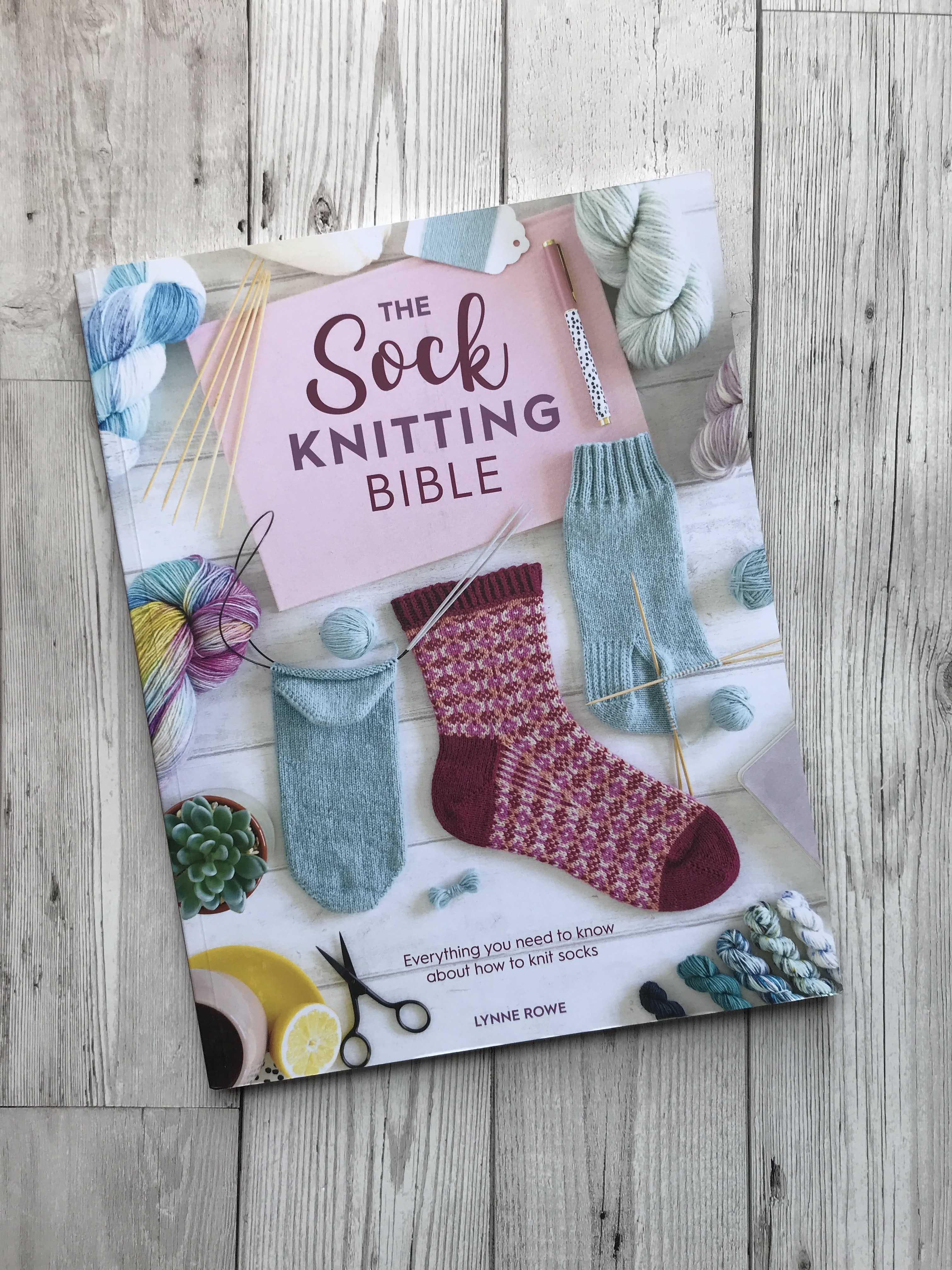
Review: The Sock Knitting Bible by Lynne Rowe

A few week's ago, I shared my Twisting Pathways Socks, which are published in The Sock Knitting Bible by Lynne Rowe.** This week, I’m taking a closer look at the rest of the book. 

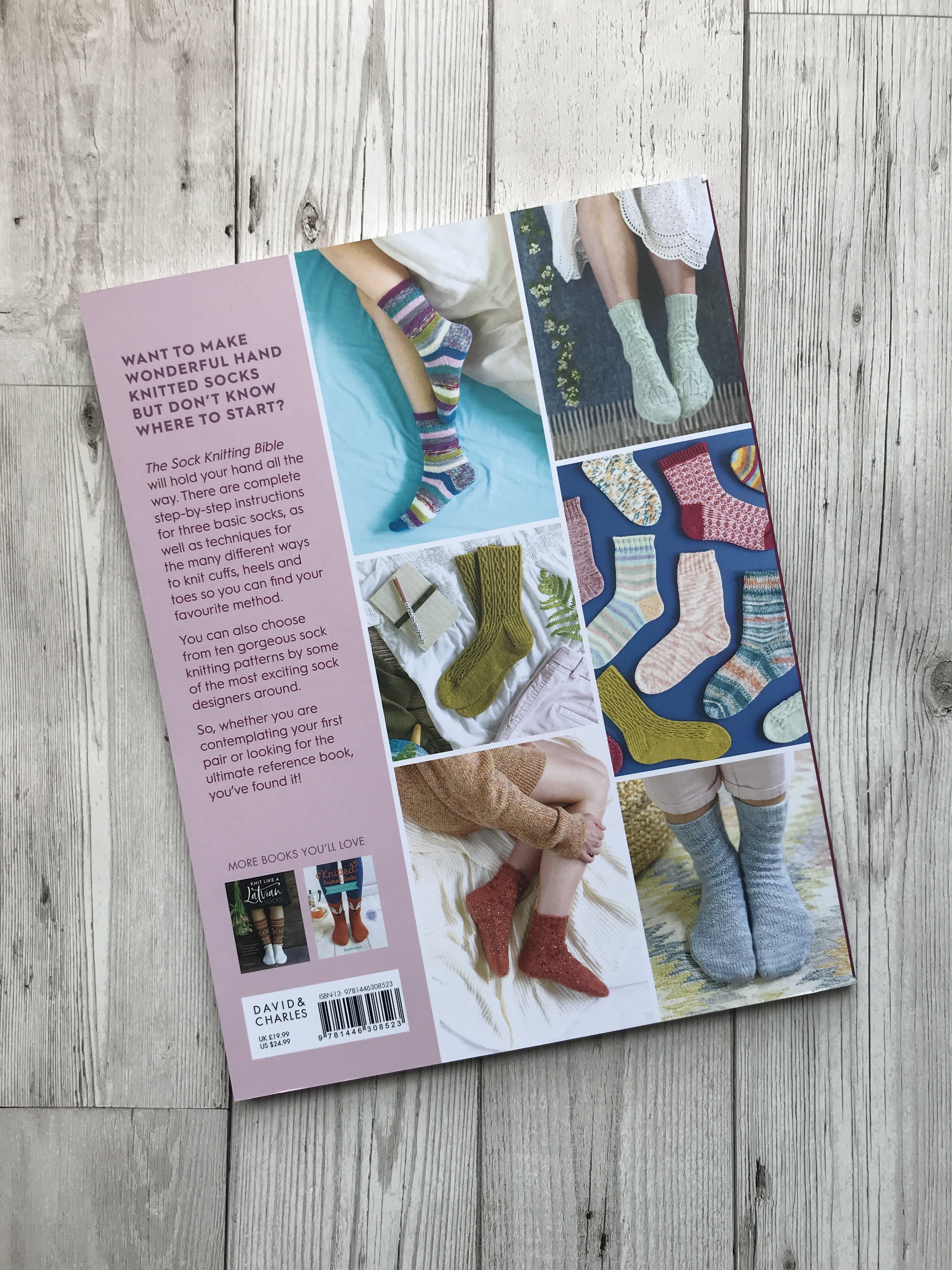
The Sock Knitting Bible,** published by David and Charles Books, is a complete guide to knitting your own socks, including step-by-step instructions for three basic sock constructions, as well as tutorials on lots of different types of heels, toes and cuffs. To round the book off, there are ten exclusive knitting patterns designed by independent knitting designers.

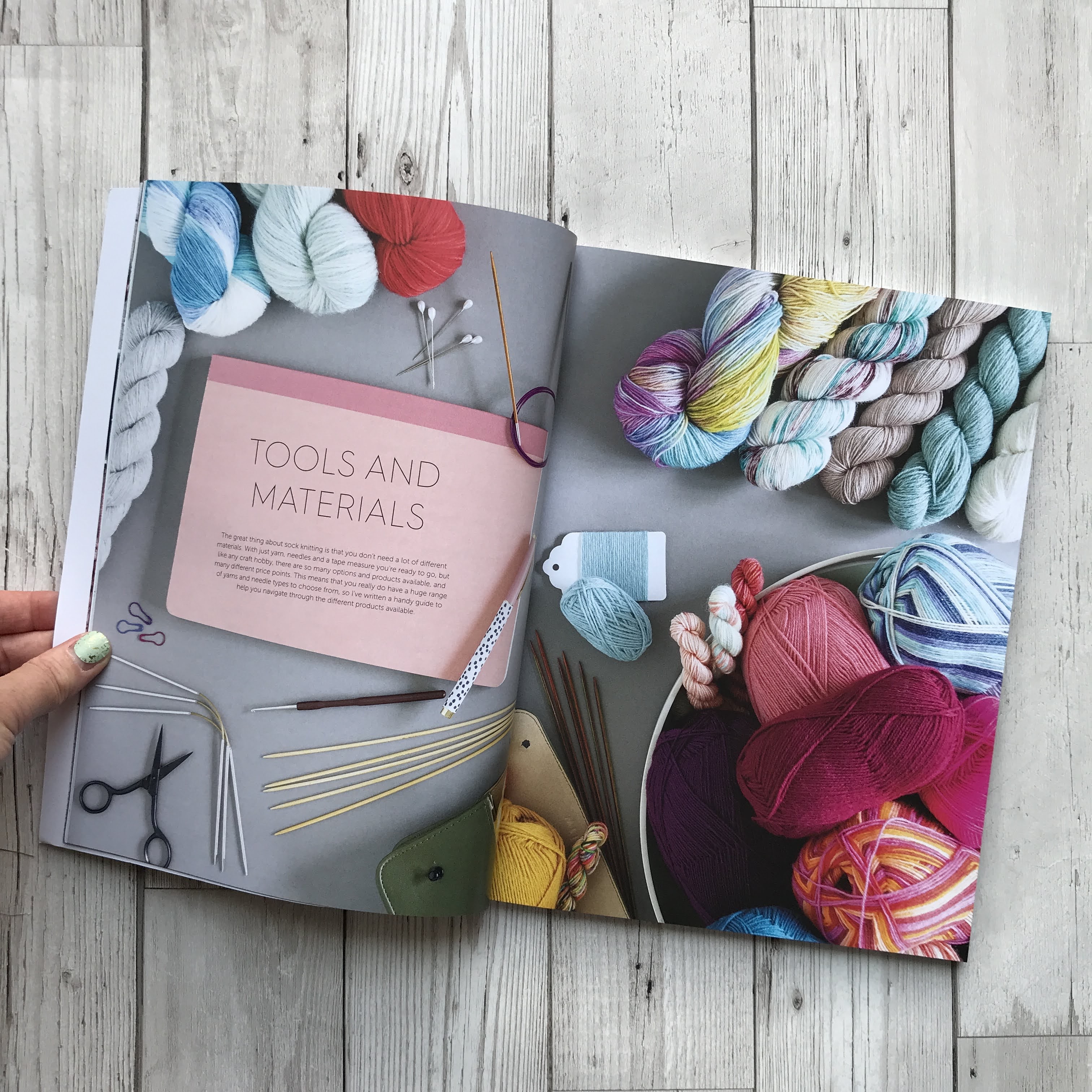
The book starts with an introductory section that includes sock anatomy, how to measure your feet and what size sock to cast on, as well as information on what yarn and needles to use, and how to swatch and check gauge. This section contains loads of invaluable information, which can really help when you’re getting started knitting socks. One minor negative is that the sock sizing chart does not include average foot circumferences, and that it only goes up to a UK 12, which is fine for most people, but I know several people whose feet are larger than that.

The sock recipes chapter includes full step-by-step tutorials on knitting three types of sock: cuff down (heel flap and gusset), toe up (short-row heel) and two needle socks (heel flap and gusset), as well as an assortment of customisations – adding contrast sections, scrappy socks, shortie socks and socks without heels. This chapter also includes variations on various sock sections: cuff types, heel types and toe types, which is great if you want to mix and match. 

The sock patterns included in the book are all beautiful. They are written with beginners in mind, so are mostly at the simpler end, with some more complex cables, lace and colourwork included for more adventurous knitters. The patterns included are all exclusive to the book:

Sloping Hills by Winwick Mum – nice, simple socks with a textured pattern

Under the Stars by Emma Potter – fabulous heavier weight socks with sequins

Twisted Pathways by me – Read about them on last week’s blog post

Spring Lace by Emma Fletcher – Pretty lace socks

Bracken Cables by Olivia Villareal – Simple cabled socks with twisted stitches

Summer Meadows by Carmen Jorissen – Gorgeous colourwork socks

Autumn Berries by Kaitlin Bathold – Lovely lace columns

Red Sky At Night by Abby Brown  – Bold colourwork socks

Beads of Dew by Anniken Allis – All-over lace with beaded detailing

Winter Snow by Kerstin Balke – Colourwork socks with stripes breaking up the colourwork sections

The pattern section has great photography throughout, and the colour palette for the projects is really cohesive. All the patterns come in at least three sizes, and include the construction details, as well as suggestions on yarn substitution, and both charts and written instructions, which makes them really user-friendly.

The final section of the book is the tutorial section, which features tutorials on knitting in the round, types of cast on, basic stitches, reading charts, increasing and decreasing, adding beads, picking up stitches, working cables, colourwork, short rows, casting off, finishing your project, and blocking. This section is really comprehensive, and includes lots of helpful illustrations.

Overall, The Sock Knitting Bible is beautifully presented, with fabulous photography that really shows all the details of the patterns and techniques included. The text is well-spaced out, with plenty of white space, making it easy to concentrate on the instruction you’re working from. This is a great resource for anyone starting their sock knitting journey, and is also a great book for experienced sock knitters – I would happily knit any of the patterns in the book.

Want to buy a copy? You can pick up your copy now from Blackwell’s.**

Note: The book was supplied by the publisher for review purposes. All opinions are my own.

**Affiliate link.